Naar de inhoud

jewelerstoolsmall

jewelry making tools
akke.beakke.be

Archief

Integrating a Pneumatic Jewelry Engraver into a Small Business

For many small jewelry businesses, every investment has to serve a practical purpose. Equipment is expected to improve quality, reduce production time, and help create products that stand out in a competitive market. Among the tools that can make a noticeable difference, a pneumatic jewelry engraver is often overlooked until production begins to demand greater precision and consistency.
Unlike manual engraving methods that rely heavily on hand pressure, a pneumatic jewelry engraver delivers controlled impacts powered by compressed air. This allows the operator to focus more on guiding the design instead of generating force. As a result, decorative patterns, lettering, and fine textures can be completed with improved accuracy while reducing physical fatigue during long engraving sessions.
JG-G01 100W Double-Handle Jewelry Pneumatic Engraving Machine 8000RPM
For a small workshop, introducing this type of equipment does not require a complete overhaul of existing operations. Many businesses begin by using the engraver for personalized services such as wedding bands, pendants, lockets, or commemorative gifts. Offering custom engraving creates additional value for customers and opens new opportunities for premium pricing without significantly increasing material costs.
Training is another important factor. Although pneumatic engraving is easier on the hands than traditional hammer-and-chisel techniques, achieving professional results still requires practice. New users often benefit from starting with simple geometric lines and basic lettering before moving on to complex scrollwork or artistic designs. Investing time in skill development usually pays off through fewer mistakes and higher customer satisfaction.
Workspace organization also deserves attention. A reliable air compressor, moisture filtration system, and stable workbench contribute to smooth operation. Good lighting and magnification help the engraver maintain precise control, especially when working on small gemstones, delicate settings, or narrow ring interiors. Keeping engraving tools clean and replacing worn tips when necessary ensures consistent performance over time.
One of the biggest advantages for a growing business is flexibility. A pneumatic engraver can be used on gold, silver, platinum, stainless steel, and several other jewelry materials with the appropriate engraving points. This versatility allows a single machine to support a broad range of custom orders without requiring multiple specialized systems.
From a financial perspective, the equipment can gradually recover its cost through engraving services alone. Personalized products often command higher profit margins because customers value uniqueness more than mass-produced designs. Faster turnaround times also allow a workshop to accept more orders during busy seasons such as holidays, anniversaries, and graduation periods.
Maintenance requirements remain relatively modest. Regular lubrication, inspection of air hoses, and keeping the compressor operating within the recommended pressure range help prevent unnecessary downtime. Establishing a simple maintenance schedule extends the service life of both the engraver and its supporting equipment.
As consumer demand continues to shift toward customized jewelry, small businesses that offer precision engraving gain an important competitive advantage. Integrating a pneumatic jewelry engraver is not simply about purchasing another machine; it is about expanding creative possibilities, improving workflow efficiency, and providing customers with personalized craftsmanship that encourages repeat business and strengthens the reputation of the workshop.

https://www.jewelerstoolsmall.com/goods-2055.html
Hoe vind je dit bericht?
Geschreven door peter25 om 11:54 Reageer op dit bericht

Jewelry Steam Cleaning Machines and Their Role in Modern Manufacturing

Jewelry production has evolved far beyond traditional handcrafting methods. While skilled artisans remain at the heart of the industry, modern workshops increasingly rely on specialized equipment to improve efficiency and consistency. Among these tools, jewelry steam cleaning machines have become an essential part of the manufacturing process, serving functions that extend well beyond simple cleaning.

During the creation of a piece of jewelry, it passes through numerous stages, including casting, filing, soldering, stone setting, polishing, and final inspection. Each step leaves behind residues such as polishing compounds, metal dust, oils, fingerprints, or flux deposits. If these contaminants are not removed properly, they can affect both appearance and quality. Steam cleaning machines address this challenge by delivering high-pressure steam capable of reaching intricate details that are difficult to access with brushes or cloths.

One of the most significant advantages of steam cleaning is precision. Modern jewelry designs often feature delicate engravings, pavé stone settings, and complex openwork patterns. Traditional washing methods may leave residues trapped inside these narrow spaces. Steam penetrates tiny gaps and flushes away unwanted particles without requiring direct physical contact. This reduces the risk of scratching polished surfaces or disturbing carefully set gemstones.

3L 2200W Portable Jewelry Steam Cleaner Machine with Steam Gun

In manufacturing environments where large quantities of jewelry are processed daily, speed is equally important. Steam cleaning machines allow operators to clean items within seconds, minimizing production bottlenecks. Instead of waiting for extended soaking or drying cycles, workers can move pieces directly to the next stage of production. This streamlined workflow contributes to higher productivity and more predictable delivery schedules.

Another important factor is quality control. Surface contamination can hide defects such as porosity, solder imperfections, or incomplete polishing. By thoroughly cleaning each item before inspection, manufacturers gain a clearer view of the finished product. This improves the accuracy of quality assessments and reduces the likelihood of flawed pieces reaching customers.

Environmental considerations have also increased the appeal of steam cleaning technology. Many traditional cleaning methods rely heavily on chemical solutions. Steam cleaning machines primarily use water, reducing the need for harsh cleaning agents and lowering chemical waste generation. For manufacturers seeking cleaner and more sustainable production practices, this represents a practical advantage.

Furthermore, steam cleaning supports customer satisfaction. Jewelry that leaves the factory free from polishing residue and fingerprints presents a more professional appearance. Whether displayed in a retail showcase or delivered directly to a client, a spotless finish reinforces perceptions of craftsmanship and value.

As jewelry manufacturing continues to embrace advanced technologies, steam cleaning machines remain a surprisingly important component of the production chain. Their ability to combine efficiency, precision, and cleanliness makes them indispensable in modern workshops. While often operating quietly in the background, these machines play a crucial role in ensuring that every finished piece meets the high standards expected in today's competitive jewelry market.

https://www.jewelerstoolsmall.com/goods-2090.html

Hoe vind je dit bericht?
Geschreven door peter25 om 11:21 Reageer op dit bericht

Integrating Jewelry Rotary Tumblers into a Modern Manufacturing Workflow

In jewelry production, efficiency is often measured not only by how quickly pieces are made but also by how consistently they reach the desired finish. While advanced technologies such as CNC machining, laser engraving, and automated casting have transformed many stages of manufacturing, finishing remains a critical step that directly affects the appearance and perceived value of the final product. Jewelry rotary tumblers have found a renewed place in modern workshops by bridging the gap between production speed and surface quality.

A rotary tumbler works through controlled friction. Jewelry components rotate inside a barrel together with selected media, water, and compounds. As the barrel turns, the media gently interacts with the metal surfaces, removing small imperfections and smoothing edges. Although the principle is simple, its role within a contemporary manufacturing environment is far more sophisticated than many people assume.

Modern jewelry facilities increasingly integrate tumbling operations immediately after casting or machining. Newly produced parts often carry burrs, oxidation marks, or rough surfaces that would otherwise require extensive manual preparation. By introducing a rotary tumbling stage early in the workflow, manufacturers can standardize surface conditions before pieces move to polishing, stone setting, or assembly departments. This creates greater consistency throughout the entire production line.

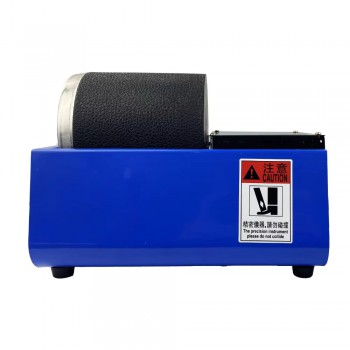
Benchtop Mini Jewelry Polishing Rotary Barrel Tumbler Drum Grinding Machine

Another advantage lies in batch processing. Instead of assigning workers to finish individual components one by one, dozens or even hundreds of small parts can be processed simultaneously. This approach is particularly valuable for businesses producing chains, findings, charms, and other high-volume items. Labor resources can then be redirected toward tasks that require specialized craftsmanship and human judgment.

Workflow planning also benefits from the predictable nature of rotary tumblers. Production managers can schedule finishing cycles according to daily output targets, creating a smoother transition between departments. Since tumbling times are relatively easy to estimate, bottlenecks become easier to identify and manage. Consistent scheduling contributes to shorter lead times and more reliable delivery commitments.

The selection of tumbling media has become increasingly specialized. Stainless steel shot may be used to achieve work hardening and brightness, while ceramic or plastic media can focus on deburring and surface refinement. By tailoring media combinations to specific alloys and product categories, manufacturers can obtain repeatable results with minimal trial and error. This level of control aligns well with modern quality management systems.

Rotary tumblers also support sustainable manufacturing goals. Efficient deburring and pre-polishing reduce the need for aggressive manual grinding, helping preserve precious metal material that might otherwise be removed unnecessarily. Longer-lasting media and improved compound formulations further contribute to reducing consumable waste.

Digital production environments have encouraged closer monitoring of finishing operations as well. Many manufacturers track tumbling cycles, media performance, and processing times alongside other production metrics. This data-driven approach helps optimize machine utilization and maintain stable product quality over extended production runs.

As jewelry manufacturing continues to evolve, rotary tumblers remain highly relevant despite the rise of newer technologies. Their ability to process large volumes efficiently, improve consistency, and support streamlined workflows makes them an essential component of modern production strategies. When properly integrated into a manufacturing system, a jewelry rotary tumbler becomes far more than a finishing tool—it becomes a key contributor to operational efficiency and product excellence.

https://www.jewelerstoolsmall.com/goods-1918.html

Hoe vind je dit bericht?
Geschreven door peter25 om 11:57 Reageer op dit bericht

How Automated Features Are Changing Jewelry Faceting Machines

The art of gemstone faceting has traditionally depended on patience, experience, and a steady hand. For decades, skilled cutters manually adjusted angles, monitored polishing progress, and made countless small corrections throughout the cutting process. While craftsmanship remains at the heart of gemstone production, modern jewelry faceting machines are introducing automated features that are reshaping how stones are cut and finished.

One of the most noticeable changes is the integration of digital angle control systems. Instead of relying solely on manual adjustments, operators can now enter precise measurements through electronic interfaces. The machine then positions the gemstone at the exact angle required for each facet. This reduces the risk of human error and allows cutters to reproduce complex designs with remarkable consistency.

Automation has also improved efficiency during repetitive tasks. Certain faceting machines can store cutting programs for frequently used gemstone patterns. Once a design is saved, the operator can recall it whenever needed. This feature is particularly valuable for workshops producing matching stones for jewelry collections. Rather than setting every angle from scratch, the machine follows a predefined sequence, saving both time and effort.

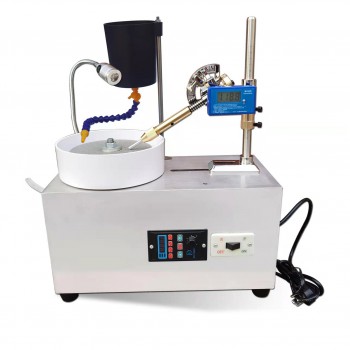
180W Gem Gemstone Faceting Machine with Digital Angle Manipulator for Grinding Polishing 3000RPM

Another important advancement is automated depth and positioning control. Maintaining correct proportions is essential for achieving maximum brilliance in a gemstone. Modern systems use sensors and precision motors to guide movement with far greater accuracy than traditional mechanical methods. As a result, stones can be cut closer to their ideal dimensions while minimizing unnecessary material loss.

Polishing operations are benefiting from automation as well. Some advanced faceting units monitor rotational speed and pressure throughout the polishing stage. Consistent polishing conditions help create smoother surfaces and more uniform reflections. For manufacturers handling large quantities of gemstones, these improvements contribute to a more predictable final product.

Training new operators has become easier thanks to automated assistance features. Beginners often struggle with maintaining precise angles and understanding complex faceting sequences. Machines equipped with digital guidance systems provide visual instructions and real-time feedback, shortening the learning curve. While expertise is still necessary, newcomers can achieve acceptable results much sooner than before.

Automation is also supporting greater design flexibility. Computer-assisted systems allow cutters to experiment with innovative facet arrangements that would be difficult to execute manually. Designers can test concepts digitally and transfer specifications directly to compatible equipment. This encourages creativity while maintaining production accuracy.

Despite these technological advances, automated faceting machines are not replacing human craftsmanship. Experienced gem cutters continue to make critical decisions regarding stone orientation, design selection, and quality assessment. Automation simply handles many of the repetitive and highly precise tasks that once consumed significant time.

As technology continues to evolve, jewelry faceting machines are becoming more accurate, efficient, and user-friendly. Automated features are helping manufacturers improve productivity while giving artisans new tools to explore complex designs. The result is a modern balance between traditional gemstone-cutting skills and advanced engineering, benefiting both professionals and customers alike.

https://www.jewelerstoolsmall.com/goods-1342.html

Hoe vind je dit bericht?
Geschreven door peter25 om 11:23 Reageer op dit bericht

How Inside Ring Engraving Machines Support Small Jewelry Businesses

In the jewelry market, personalization often carries more value than the metal or gemstone itself. A simple date, a meaningful phrase, or a pair of initials can transform an ordinary ring into a treasured keepsake. For small jewelry businesses, meeting this demand efficiently can be challenging. This is where inside ring engraving machines have become an increasingly important part of daily operations.

Unlike traditional hand engraving methods, modern inside ring engraving machines allow jewelers to create precise markings on the inner surface of rings with remarkable consistency. For small workshops that may not employ specialized engravers, these machines provide an accessible way to offer customization services without relying heavily on advanced manual skills.

One of the biggest advantages is the ability to expand product offerings. A small jewelry store may sell wedding bands, engagement rings, and commemorative pieces, but personalized engraving adds another layer of value. Customers are often willing to pay extra for a ring that carries a private message or significant date. By providing engraving in-house, businesses can generate additional revenue from products they already sell.

Time savings also play a significant role. Sending rings to an outside engraving service introduces delays, shipping costs, and the risk of handling errors. With an in-house engraving machine, customization can often be completed on the same day. This faster turnaround helps businesses satisfy customers who need gifts or wedding jewelry within a limited timeframe.

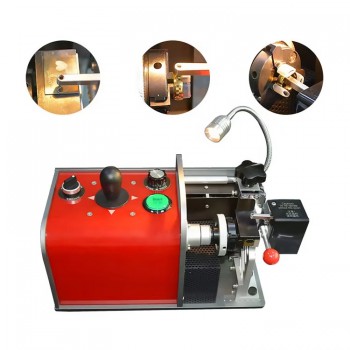
Jewelry Engraving Machine for Rings Pin Engraving and Stamping Machine for Jewelry Marking

Consistency is another important factor. Hand engraving can vary depending on the skill and condition of the engraver. Machine-based engraving produces uniform lettering and spacing across multiple orders. For businesses that handle a steady volume of personalized rings, maintaining a professional appearance across every piece helps strengthen customer trust and brand reputation.

Small jewelry businesses frequently operate with limited staff, making efficiency a priority. Modern engraving systems are designed with user-friendly software and straightforward controls. Employees can learn basic operation relatively quickly, allowing the business to integrate engraving services without extensive training programs. This flexibility is especially valuable during busy seasons when customer demand increases.

Inside ring engraving machines also support creative freedom. Beyond names and dates, many systems can engrave symbols, decorative patterns, and even custom designs. This capability enables small businesses to distinguish themselves from larger competitors by offering unique personalization options tailored to individual customers.

Another often-overlooked benefit is customer engagement. When clients participate in choosing a message or design, they become more emotionally invested in the purchase. Personalized jewelry tends to carry stronger sentimental value, which can lead to positive reviews, referrals, and repeat business. In a competitive market, these long-term relationships are often more valuable than a single sale.

As consumer preferences continue to favor customized products, small jewelry businesses need practical ways to deliver personalization without sacrificing efficiency. Inside ring engraving machines provide a solution that combines precision, speed, and flexibility. By bringing engraving capabilities directly into the workshop, jewelers can enhance customer satisfaction, create new revenue opportunities, and strengthen their position in an increasingly personalized marketplace.

https://www.jewelerstoolsmall.com/goods-1960.html

Hoe vind je dit bericht?
Geschreven door peter25 om 11:19 Reageer op dit bericht

Top Features to Look for in a Jewelry Magnetic Tumbler

A jewelry magnetic tumbler may appear simple from the outside, but the differences between models can have a significant impact on polishing quality, operating efficiency, and long-term reliability. Whether you run a professional jewelry workshop or create handmade pieces on a smaller scale, selecting the right machine can save hours of finishing work while delivering a more consistent shine. Before making a purchase, several key features deserve careful attention.

One of the first elements to evaluate is motor performance. The magnetic field generated by the machine controls the movement of the stainless-steel pins inside the polishing bowl. A stable and well-designed motor keeps these pins moving smoothly, allowing them to reach intricate areas such as chain links, filigree patterns, and stone settings. Machines with inconsistent rotation often produce uneven polishing results and may require additional manual finishing afterward.

Container capacity is another practical consideration. Small jewelry magnetic tumblers are suitable for hobbyists or custom jewelers who process only a few pieces at a time. Larger production environments, however, benefit from bigger bowls that can accommodate higher workloads. Choosing the appropriate capacity helps maximize productivity without overloading the machine.

Speed adjustment is a feature that many experienced users appreciate. Different jewelry materials respond differently to polishing action. Soft metals may require gentler treatment, while more durable alloys can withstand more aggressive polishing. A tumbler with variable speed control gives operators greater flexibility and helps prevent unnecessary wear on delicate items.

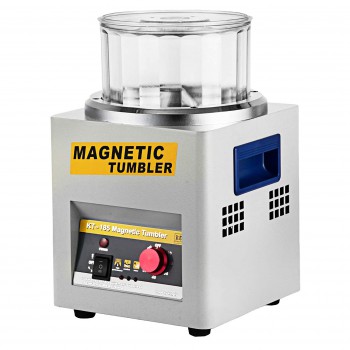
Jewelry Magnetic Tumbler 2000 RPM Finisher 7.3 inch Magnetic Polisher with Adjustable Speed KT185

The quality of the polishing bowl itself should not be overlooked. Durable bowls resist chemical exposure from polishing compounds and maintain their shape after prolonged use. Smooth interior surfaces also contribute to better circulation of polishing media, ensuring more uniform contact with jewelry pieces throughout the process.

Noise levels can become an important factor in busy workshops. A poorly balanced magnetic tumbler may generate excessive vibration and unwanted sound during operation. Machines designed with stability in mind generally run more quietly and create a more comfortable working environment, especially when used for extended periods.

Ease of maintenance is equally valuable. Routine cleaning is necessary to remove residue, metal particles, and polishing compounds. Models with removable bowls and accessible components simplify maintenance tasks and reduce downtime between polishing cycles. Over time, this convenience can contribute to higher overall efficiency.

Safety features deserve attention as well. Overheating protection, secure electrical components, and stable bases help reduce operational risks. While these details may seem secondary during the purchasing process, they become increasingly important during daily use.

Finally, consider the machine's overall construction quality. Strong materials, precise assembly, and reliable electronic components often indicate a longer service life. While premium models may involve a higher initial investment, they frequently deliver better performance and lower maintenance costs over the years.

A jewelry magnetic tumbler is more than just a polishing tool. It is an essential part of the finishing process that influences the appearance and quality of every piece produced. By focusing on performance, durability, flexibility, and ease of use, buyers can select equipment that continues to provide value long after the initial purchase.

https://www.jewelerstoolsmall.com/goods-1128.html

Hoe vind je dit bericht?
Geschreven door peter25 om 11:32 Reageer op dit bericht

Advanced Techniques for Jewelry Rotary Tumbler Users

A jewelry rotary tumbler looks simple from the outside: a rotating barrel, some media, and time doing the work. Yet experienced users know that consistent, high-quality results rarely come from simply loading parts and switching the machine on. The difference between average finishing and refined surface quality lies in a set of small, deliberate techniques that develop with practice.

One of the most overlooked factors is load balance inside the barrel. A rotary tumbler does not perform well when the contents are too sparse or too crowded. Advanced users aim for a fill level that allows free movement without excessive impact. Too little material causes uneven rolling, while overloading leads to muted motion and inefficient polishing. Achieving the right ratio between jewelry, media, and liquid creates a controlled “flow” inside the drum rather than chaotic tumbling.

Benchtop Mini Jewelry Polishing Rotary Barrel Tumbler Drum Grinding Machine

Media selection is another area where subtle adjustments make a large difference. Ceramic media is commonly used for cutting and shaping, but experienced users often blend different shapes and sizes to influence how energy is transferred during rotation. Small cylindrical pieces reach tight areas, while larger shapes stabilize movement and prevent aggressive abrasion. In finer stages, switching to softer plastic or stainless steel media can shift the process from material removal to surface refinement without changing equipment.

Timing is rarely fixed in advanced workflows. Instead of relying on preset cycles, skilled operators observe the condition of both media and workpieces. The sound of the tumbler, the clarity of the slurry, and even the temperature of the barrel become informal indicators of progress. Extending or shortening cycles based on these cues helps prevent over-polishing, which can round edges or dull engraved details.

Slurry management is another critical technique. The liquid inside the tumbler is not just a lubricant; it acts as a medium for carrying away debris and controlling friction. Advanced users adjust water levels and compound concentration depending on the stage of finishing. A thicker slurry increases cushioning and reduces surface aggression, while a thinner mix enhances cutting action. Periodic refreshing of the solution prevents residue buildup that can reduce efficiency and stain delicate metals.

Layering processes across multiple stages is where rotary tumbling becomes truly refined. Instead of expecting a single long cycle to deliver a finished surface, experienced users divide polishing into phases: initial shaping, intermediate smoothing, and final burnishing. Each stage uses different media and sometimes different speeds. This staged approach produces depth in the final surface quality that single-step processes cannot achieve.

Maintenance of the machine itself also plays a role in advanced use. A well-balanced drum reduces vibration and ensures even contact between media and parts. Users who regularly inspect seals, alignment, and rotation consistency often achieve more predictable results. Even small mechanical inconsistencies can translate into uneven polishing over time.

Ultimately, advanced rotary tumbling is less about the machine and more about control over variables. Load density, media behavior, slurry composition, and cycle timing form a system that responds to small adjustments. Mastery comes from noticing how these elements interact rather than treating the process as automatic. In that sense, the tumbler becomes less of a tool and more of a controlled environment — one where precision is built gradually, layer by layer.

https://www.jewelerstoolsmall.com/goods-1918.html

Hoe vind je dit bericht?
Geschreven door peter25 om 11:59 Reageer op dit bericht

Creating Fine Detail Patterns with Pneumatic Jewelry Engravers

In jewelry workshops where precision matters more than speed, pneumatic engraving tools have earned a permanent place on the bench. Unlike traditional hand gravers that rely entirely on wrist control, pneumatic jewelry engravers use compressed air to deliver rapid micro-strikes, allowing artists to carve extremely fine patterns with less physical strain. For craftsmen working on rings, pendants, watches, or custom silver pieces, these tools open the door to details that would be difficult to achieve consistently by hand alone.
One of the biggest advantages of pneumatic engraving lies in control. The tool responds almost instantly to changes in pressure and movement, making it easier to create flowing scrollwork, deep shading, and delicate texture. Fine line engraving becomes smoother because the tool does not require excessive force. Instead of pushing hard through the metal, the engraver guides the cutting tip while the air-powered mechanism handles the impact. This results in cleaner cuts and fewer accidental slips.
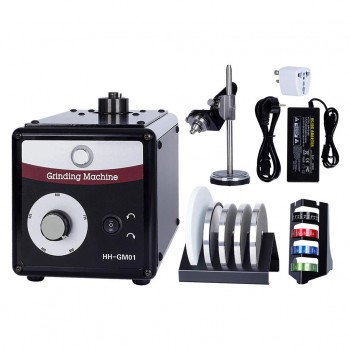
HH-GM01 150W Adjustable Angle Jewelry Engraving Knife Grinding Machine 400-900RPM
Material preparation also plays a surprisingly large role in detail quality. Highly polished surfaces reflect light differently, making engraved patterns stand out more sharply. Many engravers lightly coat the metal with a marker or transfer film before sketching guidelines. This simple step helps maintain symmetry, especially when repeating floral or geometric motifs around curved surfaces like wedding bands.
Choosing the correct graver geometry is equally important. A narrow V-point graver is commonly used for bright cuts and crisp outlines, while rounded tools create softer textures and shading. Experienced jewelers often modify their own gravers to suit a specific style. Even a tiny adjustment to the angle can dramatically change how the tool behaves on gold, silver, platinum, or titanium.
Depth control is another skill that separates average engraving from exceptional work. Deep cuts catch shadows and create bold contrast, while shallow cuts produce subtle decoration that almost seems woven into the metal. Pneumatic systems allow artists to transition smoothly between the two. In ornamental engraving, this variation in depth gives patterns a sense of movement and dimension rather than a flat, mechanical appearance.
Lighting conditions inside the workshop should never be underestimated. Fine detail work demands strong directional light and magnification. Many jewelers use microscope systems paired with pneumatic engravers because the combination allows them to cut details smaller than a grain of rice with remarkable consistency. Under magnification, even tiny errors become visible, which encourages slower, more deliberate hand movements.
Practice remains the real foundation behind successful engraving. Beginners often focus too much on tool settings while ignoring rhythm and hand positioning. Skilled engravers usually develop a steady pace that matches the pulse of the pneumatic tool. Over time, muscle memory takes over, allowing more attention to shift toward artistic composition rather than basic control.
Modern pneumatic jewelry engravers have transformed decorative metalwork from a physically demanding craft into a highly refined artistic process. While the technology assists with precision, the personality of the final design still comes from the engraver’s eye, patience, and creative instinct. No machine can replace that human element, and that is exactly why hand engraving continues to hold such value in fine jewelry today.

Related articles: https://blog.udn.com/G_113682304699756508/188824933
Hoe vind je dit bericht?
Geschreven door peter25 om 11:00 Reageer op dit bericht

Restoring Vintage Rings with a Jewelry Buffer Polisher

Vintage rings often carry more than material value. A scratched wedding band from the 1940s or a faded cocktail ring from the disco era can hold decades of stories in a single piece of metal. Yet time leaves visible marks. Fine scratches, dull surfaces, and layers of oxidation slowly hide the character that once made these rings stand out. One of the most effective ways to bring them back to life is with a jewelry buffer polisher.

Unlike aggressive grinding tools, a jewelry buffer polisher works through controlled friction. It smooths surfaces gradually, allowing a restorer to revive the shine without removing unnecessary material. This is especially important when working on antique jewelry because older rings are often softer due to wear and repeated resizing over the years.

The first step in restoration is inspection. Vintage rings can have hidden cracks, loose stones, or worn prongs that become dangerous during polishing. A quick cleaning with warm water and mild soap usually reveals the true condition of the piece. Dirt packed into engravings or beneath gemstones can create the illusion of damage when the ring is actually structurally sound.

Choosing the right polishing compound matters just as much as the machine itself. Tripoli compound is commonly used for the initial stage because it removes oxidation and deeper surface marks efficiently. After that, jewelers switch to rouge compounds for the final mirror finish. Using the wrong compound on delicate metals such as platinum or high-karat gold can leave uneven textures that are difficult to correct later.

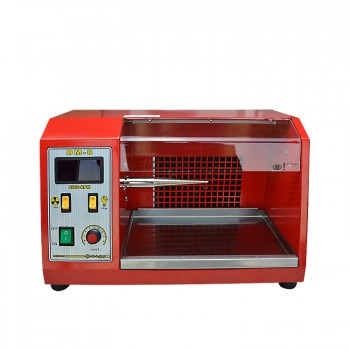
YALI DM-8 4200RPM Variable Frequency Jewelry Polishing Buffing Machine Cloth Wheel Polisher with Dust Collector

Buffer speed also changes the outcome dramatically. High speed may save time, but it increases heat buildup. Excessive heat can weaken solder joints or even damage sensitive gemstones like opals and emeralds. Experienced restorers often work in short intervals, letting the ring cool naturally before continuing. Patience usually produces better results than force.

One overlooked detail is preserving the ring’s original personality. Not every vintage ring should look factory-new. Slight wear patterns and softened edges often contribute to its charm. Over-polishing can erase hand engravings, maker’s marks, or subtle design details that distinguish authentic vintage jewelry from modern reproductions. Good restoration enhances history instead of deleting it.

Different metals respond differently during polishing. Sterling silver brightens quickly but scratches easily during handling. Platinum develops a deep luster rather than a sharp shine, requiring a softer finishing touch. Older white gold rings may reveal yellow tones beneath worn rhodium plating after buffing, making replating an important final step for some restorations.

Safety should never be ignored around polishing equipment. Rings can catch on buffing wheels and launch across the workshop in seconds. Protective glasses, dust extraction, and firm grip techniques are essential, particularly when restoring small or lightweight pieces. Many professional jewelers learn this lesson after losing a ring to the corner of a workshop wall at least once.

A properly restored vintage ring does more than sparkle under light. It reconnects the owner with another era while extending the life of the piece for future generations. With careful technique and the right jewelry buffer polisher, even heavily worn rings can regain the elegance they carried decades ago.

Related articles: https://ameblo.jp/frank35/entry-12966148283.html

Hoe vind je dit bericht?
Geschreven door peter25 om 10:59 Reageer op dit bericht

Beginner’s Guide to Using a Jewelry Drill Press Safely

A jewelry drill press looks simple at first glance: a motor, a spindle, and a small working table. Yet anyone who has worked with metal, resin, or gemstones quickly learns that precision tools demand respect. For beginners, safety is not an abstract rule but a habit formed through repetition and attention.

Before switching on the machine, the setup stage already determines most of the outcome. The jewelry making drill press must sit on a stable surface, preferably one that does not vibrate under load. Even minor wobble can turn a clean hole into a drifting cut, especially in thin metal sheets. Clamping the base or using a weighted stand prevents unwanted movement during operation.

Choosing the correct drill bit is more important than many beginners expect. Jewelry work often involves delicate materials such as silver, copper, or soft gemstones. A bit that is too large or too aggressive can tear the surface instead of cutting it cleanly. Starting with small sizes and gradually increasing diameter gives better control and reduces material stress.

Securing the workpiece is another point that should never be skipped. Holding metal by hand while drilling is a common beginner mistake, usually corrected after the first unexpected spin. A small vise or clamp keeps the material steady and allows both hands to focus on guiding the operation rather than chasing movement.

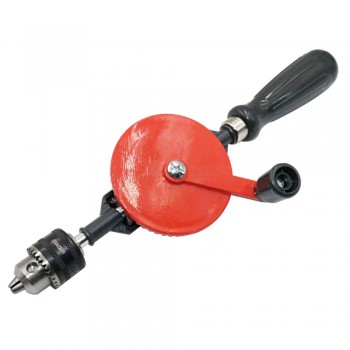
Mini Manual Hand Drill 1/4-Inch with Steel Cast for Drilling Wood Plastics Metal

Speed control plays a major role in achieving clean results. High speed is not always better; in fact, softer metals and fragile pieces often respond better to slower rotation. Running the drill press too fast generates heat, which can dull bits and damage the material surface. Adjusting speed according to thickness and hardness becomes second nature with experience.

Eye protection is non-negotiable. Tiny metal shards can eject at surprising speed, especially when a bit exits the underside of a workpiece. Safety glasses should be worn even during short drilling tasks. For extended sessions, a simple dust mask adds another layer of protection against fine particles that accumulate in the air.

Another overlooked habit is clearing debris during work. Allowing chips to build up around the drill site increases friction and reduces accuracy. A small brush or air blower keeps the cutting area visible and prevents clogging. This also helps maintain better control over depth and alignment.

Hands should always stay aware of positioning. Even though the drill press is a stationary tool, the rotating bit creates a strong pulling effect on loose clothing, gloves, or hair. Removing jewelry, tying back long hair, and avoiding loose sleeves reduces unnecessary risk.

After finishing a task, stopping the machine fully before adjusting the workpiece is essential. Many minor workshop injuries occur during this “in-between” moment when the bit is still slowing down but attention has already shifted away.

With practice, using a jewelry drill press becomes less about caution and more about rhythm. Each step—setup, alignment, drilling, and cleanup—forms a cycle that supports both precision and safety. For beginners, developing this rhythm early prevents bad habits and lays the foundation for more advanced jewelry work later on.

https://www.jewelerstoolsmall.com/goods-2039.html

Hoe vind je dit bericht?
Geschreven door peter25 om 12:06 Reageer op dit bericht

Meer van jewelerstoolsmall

↑ Terug naar de berichten