
Vrijdag 9 juli 2010
ROCKABILLY GALS
Oh La Baby - Laura Lee Perkins
Geschreven door pippop om 11:26
Reageer op dit bericht



ROCKABILLY GALS
Oh La Baby - Laura Lee Perkins
ROCKABILLY GALS
Lorelei Lynn - Rock 'A' Bop
ROCKABILLY GALS
Karen Wheeler -- Muleskinner Blues
ROCKABILLY GALS
Little Peggy March - I will follow him
ROCKABILLY GALS
sweet nothings brenda lee
 click on photo

In the period of 1970's, most of the bands that were playing 1950's rock'n'roll and rockabilly were using bass guitar. Ray Campi was one of rare players that kept the tradition of slap bass alive. Those who attended some of his shows remembers his charismatic performance and influential stage persona. Ray's appearance at the "Blue Suede Shoes", a three day rock'n'roll festival that happened in England in 1979, was the introduction of slap bass to many young Teddy Boys and rockers. This legendary concert was later released as a feature film that remained as the evidence of Ray's performance on this wild weekend.
Originally from New York (born in Yonkers, NY in 1934), Ray Campi was always drawn to southern culture and music. He moved to Austin, Texas when he was ten and soon started learning to play standard and steel guitar. He made many recordings in the 1950's, but it wasn't untill 1970's when his career took off when he switched to upright bass and was rediscovered by Ronny Weiser. He released thirteen of Ray's albums and dozen of singles for his record label Rollin' Rock. Ray Campi's music is now available on more than 55 vinyl records and CDs worldwide.
I'm proud to present to you here, on the Art of Slap Bass, member of the Rockabilly Hall of Fame, the musician known as the King of Rockabilly:
 click on photo

| Born Otha Ellas Bates (later known as Ellas McDaniel), 28 December 1928, McComb, Mississippi, USA. After beginning his career as a boxer, where he received the sobriquet "Bo Diddley", the singer worked the blues clubs of Chicago with a repertoire influenced by Louis Jordan, John Lee Hooker and Muddy Waters. In late 1954, he teamed up with Billy Boy Arnold and recorded demos of "I'm A Man" and "Bo Diddley". Re-recorded at Chess Studios with a backing ensemble comprising Otis Spann (piano), Lester Davenport (harmonica), Frank Kirkland (drums) and Jerome Green (maracas), the a-side, "Bo Diddley", became an R&B hit in 1955. Before long, Diddley's distorted, amplified, custom-made guitar, with its rectangular shape and pumping rhythm style became a familiar, much-imitated trademark, as did his self-referential songs with such titles as "Bo Diddley's A Gunslinger", "Diddley Daddy" and "Bo's A Lumberjack". His jive-talking routine with "Say Man" (a US Top 20 hit in 1959) continued on "Pretty Thing" and "Hey Good Lookin'", which reached the lower regions of the UK charts in 1963. By then, Diddley was regarded as something of an R&B legend and found a new lease of life courtesy of the UK beat boom. The Pretty Things named themselves after one of his songs, while his work was covered by such artists as the Rolling Stones, the Animals, Manfred Mann, the Kinks, the Yardbirds, Downliners Sect and the Zephyrs. Diddley subsequently jammed on albums by Chuck Berry and Muddy Waters and appeared infrequently at rock festivals. His classic version of "Who Do You Love" became a staple cover for a new generation of US acts ranging from Quicksilver Messenger Service to the Doors, Tom Rush and Bob Seger, while the UK's Juicy Lucy took the song into the UK Top 20. |
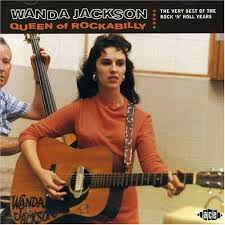
Click here on photo


