|
Small lapidary machines have opened the door for hobbyists and independent makers to explore gemstone cutting and polishing without the need for a full-scale workshop. Compact, affordable, and versatile, these machines are capable of producing impressive results—if they are used correctly. To truly get the most out of a small lapidary machine, it’s important to focus on technique, preparation, and consistent maintenance rather than raw power.
One of the most important tips is to start with the right expectations. Small lapidary cabbing machines are designed for precision and control, not speed. Trying to rush the process by applying too much pressure often leads to uneven surfaces, excessive heat, or even cracked stones. Let the abrasives do the work. A light, steady touch allows for better control and cleaner facets or cabochon shapes, especially when working with harder materials like agate or quartz.
Material preparation plays a bigger role than many beginners realize. Before turning on the machine, inspect your rough carefully. Removing obvious fractures or weak points with a trim saw—or by strategic grinding—can save time and prevent breakage later. Marking the stone with a wax pencil or marker helps guide your shaping and ensures you don’t grind away valuable material unintentionally.
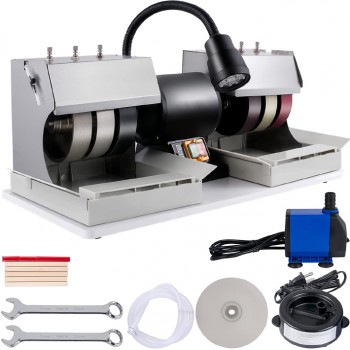
Proper wheel and grit selection is another key factor. Small machines often come with fewer wheels, so choosing the correct grit sequence is essential. Skipping grits may seem like a time-saver, but it usually results in stubborn scratches that reappear during polishing. Work through each grit patiently, making sure all marks from the previous stage are completely removed before moving on. This discipline is what separates a dull stone from a professional-looking finish.
Water management is especially critical on compact lapidary setups. Adequate water flow keeps the stone cool, reduces dust, and improves surface quality. Too little water causes overheating and rapid wheel wear, while too much can reduce visibility and control. Adjust the flow so the wheel stays wet but not flooded, and clean splash trays regularly to prevent grit contamination.
Maintenance is often overlooked, yet it directly affects performance. Worn or glazed wheels cut poorly and generate unnecessary heat. Dressing grinding wheels periodically restores their cutting ability and extends their lifespan. Bearings, belts, and motors should also be checked from time to time, as small machines are more sensitive to misalignment and buildup than larger industrial units.
Finally, take advantage of the machine’s size rather than fighting it. Small lapidary machines excel at detail work, freeform shapes, and careful polishing. They are ideal for experimenting with new materials or techniques without the intimidation of large equipment. By working within their strengths and respecting their limitations, users can achieve results that rival those produced on much larger systems.
In conclusion, getting the most out of a small lapidary machine is less about power and more about patience, preparation, and care. With thoughtful technique and regular maintenance, these compact tools can deliver outstanding gemstone finishes and long-lasting satisfaction for any lapidary enthusiast.
https://www.jewelerstoolsmall.com/goods-1895.html
27-01-2026, 10:33 geschreven door peter25
|



