jewelerstoolsmall
Inhoud blog
  • Optimizing Workflow with an Advanced Inside Ring Engraving Machine
  • Understanding Energy Settings in Professional Jewelry Spot Welding Machines
  • Creating Textured Metal Sheets Using a Jewelry Rolling Mill Machine
  • What Makes a High-Quality Pearl Drilling Machine Stand Out?
  • Is a Pearl Drilling Machine Worth the Investment for Small Businesses?

    Zoeken in blog


    Beoordeel dit blog
      Zeer goed
      Goed
      Voldoende
      Nog wat bijwerken
      Nog veel werk aan
     

    jewelry making tools
    26-03-2026
    Klik hier om een link te hebben waarmee u dit artikel later terug kunt lezen.Common Failure Modes of Small Graphite Crucibles and How to Prevent Them

    Small graphite crucibles are widely used in jewelry casting, metal refining, and laboratory melting due to their excellent thermal conductivity and resistance to high temperatures. However, despite their durability, they are not immune to failure. Understanding common failure modes and implementing preventive measures can significantly extend their service life and improve process reliability.

    One of the most frequent issues is thermal shock cracking. Small graphite crucibles can crack when exposed to rapid temperature changes, such as placing a cold crucible directly into a hot furnace or removing a hot crucible into a cool environment. This sudden expansion or contraction creates internal stress that leads to fractures. To prevent this, always preheat crucibles gradually. Start at a low temperature and increase it step by step, allowing the material to expand evenly.

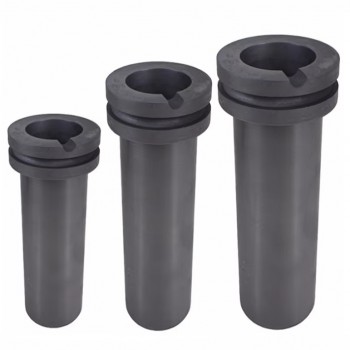
    1Pcs Gold Melting Furnace Crucible Gold Melter Crucible Graphite Crucible

    Another common failure mode is oxidation erosion. At high temperatures, especially above 500°C in the presence of oxygen, graphite begins to oxidize, leading to material loss and thinning of the crucible walls. Over time, this weakens the structure and may result in leaks or breakage. To minimize oxidation, operate in a controlled or reducing atmosphere whenever possible. Additionally, keeping the furnace well-sealed and avoiding unnecessary airflow can help slow down oxidation.

    Chemical attack from fluxes and slags is also a major contributor to crucible degradation. Certain fluxes used in metal refining can react with the graphite or the bonding materials within the crucible, causing surface pitting or structural weakening. To prevent this, select fluxes that are compatible with graphite and avoid prolonged exposure to aggressive chemicals. After each use, remove residual slag carefully to prevent buildup and further reactions.

    Mechanical damage is another overlooked but critical issue. Small graphite crucibles are relatively fragile and can be chipped or cracked during handling, especially when using metal tongs or tools. Even minor surface damage can propagate into larger cracks during heating cycles. Using properly designed crucible tongs and handling the crucible gently can significantly reduce this risk. It is also advisable to inspect crucibles regularly for small cracks or chips before use.

    Overheating can also shorten the lifespan of a crucible. Exceeding the recommended maximum temperature causes accelerated wear, softening of the binder, and eventual structural failure. Always follow the manufacturer’s temperature guidelines and use a reliable temperature monitoring system to avoid accidental overheating.

    Finally, improper storage conditions can contribute to premature failure. Graphite crucibles can absorb moisture if stored in humid environments. When heated, this moisture turns into steam, which can cause internal pressure and cracking. Store crucibles in a dry, well-ventilated area and, if necessary, pre-dry them at a low temperature before use.

    In conclusion, while small graphite crucibles are essential tools in many high-temperature applications, their longevity depends heavily on proper handling and operation. By addressing issues such as thermal shock, oxidation, chemical attack, mechanical damage, overheating, and moisture exposure, users can significantly extend crucible life and maintain consistent performance.

    Related articles: https://blog.udn.com/G_113682304699756508/187632036

    26-03-2026, 10:20 geschreven door peter25

    Reageer (0)
    0 1 2 3 4 5 - Gemiddelde waardering: 0/5 - (0 Stemmen)
    19-03-2026
    Klik hier om een link te hebben waarmee u dit artikel later terug kunt lezen.Scaling Personalized Orders with Inside Ring Engraving Machines

    In today’s jewelry market, personalization is no longer a luxury—it is an expectation. Customers increasingly seek meaningful, customized pieces that commemorate milestones, relationships, and personal stories. Among these, engraved rings hold a special place. To meet rising demand without sacrificing efficiency or quality, many jewelers are turning to inside ring engraving machines as a scalable solution.

    Inside ring engraving presents unique technical challenges. The curved and confined surface of a ring’s interior requires precision tools capable of maintaining consistent depth, alignment, and legibility. Traditional hand engraving, while beautiful, is time-consuming and difficult to scale for high-volume orders. Modern engraving machines, particularly those equipped with CNC control or laser technology, overcome these limitations by automating the process while preserving fine detail.

    One of the key advantages of inside ring engraving machines is repeatability. Once a design or font is programmed, the machine can reproduce it accurately across dozens or hundreds of rings. This is especially valuable for businesses handling bulk orders, such as wedding bands or corporate gifts. Automation reduces human error and ensures that each piece meets the same high standard, regardless of volume.

    Speed is another critical factor. With increasing demand for fast turnaround times, manual engraving can quickly become a bottleneck. Advanced engraving machines significantly reduce production time per piece, allowing workshops to process more orders in less time. Some systems also support batch processing, where multiple rings can be engraved sequentially with minimal operator intervention. This efficiency directly translates into higher throughput and improved customer satisfaction.

    Customization flexibility is equally important. Modern engraving machines support a wide range of fonts, symbols, and even complex graphics. Jewelers can easily switch between designs, adjust text size, or incorporate customer-specific elements such as handwriting or fingerprints. This adaptability enables businesses to offer highly personalized services without disrupting workflow.
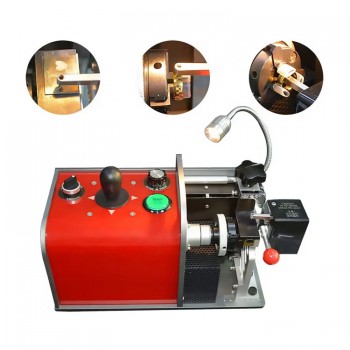
    Jewelry Engraving Machine for Rings Pin Engraving and Stamping Machine for Jewelry Marking

    Integration with digital design tools further enhances scalability. Orders can be managed through software platforms where customers input their engraving preferences online. These specifications can then be directly imported into the engraving machine, reducing manual data entry and minimizing errors. This seamless digital workflow is particularly beneficial for e-commerce jewelry brands handling large volumes of personalized orders.

    However, scaling personalized engraving is not just about technology—it also requires thoughtful process management. Proper ring positioning, material compatibility, and tool maintenance are essential to ensure consistent results. Operators must be trained to handle different metals, such as gold, platinum, or titanium, each of which responds differently to engraving. Regular calibration and maintenance of the machine are also crucial to avoid deviations in quality over time.

    Cost considerations should not be overlooked. While the initial investment in an inside ring engraving machine can be significant, the long-term benefits often outweigh the expense. Reduced labor costs, increased production capacity, and the ability to capture a growing market for personalized jewelry make it a worthwhile investment for many businesses.

    In conclusion, inside ring engraving machines play a pivotal role in scaling personalized jewelry orders. By combining precision, efficiency, and flexibility, they enable jewelers to meet modern consumer expectations while maintaining profitability. As personalization continues to drive the industry forward, adopting advanced engraving technology is not just an option—it is a strategic necessity.

    https://www.jewelerstoolsmall.com/goods-1960.html

    19-03-2026, 11:03 geschreven door peter25

    Reageer (0)
    0 1 2 3 4 5 - Gemiddelde waardering: 0/5 - (0 Stemmen)
    14-03-2026
    Klik hier om een link te hebben waarmee u dit artikel later terug kunt lezen.Effects of Fluxes and Slags on Clay Graphite Crucible Degradation

    Clay graphite crucibles are widely used in small foundries, jewelry workshops, and metal casting laboratories because they combine excellent thermal shock resistance with high thermal conductivity. These crucibles are typically made from a mixture of graphite, clay, and other refractory materials. While they perform well under high temperatures, their lifespan can be significantly affected by the chemical interactions with fluxes and slags during melting processes. Understanding how these substances influence crucible degradation is essential for improving efficiency and reducing replacement costs.

    Fluxes are commonly added to molten metal to remove impurities, prevent oxidation, and improve metal fluidity. In many cases, they contain compounds such as borates, fluorides, or alkali salts. Although these chemicals are beneficial for refining the melt, they can be aggressive toward crucible materials. When fluxes come into contact with the clay-bonded structure of a clay graphite crucible, they may react with the silica and alumina components of the clay matrix. This chemical reaction gradually weakens the structural bond that holds the graphite particles together, leading to erosion or surface pitting inside the crucible.

    Slags, which form as a byproduct of flux reactions and impurity removal, can also accelerate crucible degradation. Slag often contains metal oxides, silicates, and other compounds that become highly reactive at elevated temperatures. When slag remains in prolonged contact with the crucible wall, it can penetrate microscopic pores in the refractory structure. Over time, this infiltration leads to chemical corrosion and mechanical weakening. The problem becomes more severe when the slag has a low viscosity, allowing it to spread easily along the crucible surface.

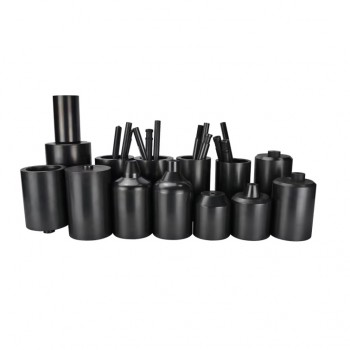
    Graphite Smelting Crucible with Stopper for Metal Casting & Gold Silver Brass Melting

    Another important factor is temperature. At extremely high melting temperatures, chemical reactions between slags, fluxes, and crucible materials occur more rapidly. Thermal cycling—repeated heating and cooling—can further intensify degradation by creating microcracks in the crucible. These cracks allow molten slag or flux residues to penetrate deeper into the structure, accelerating wear.

    Operational practices also influence the degree of damage. For instance, leaving molten slag inside the crucible for extended periods increases chemical attack. Similarly, aggressive stirring or scraping during slag removal can damage the protective layer that forms naturally on the crucible surface. Once this layer is broken, fresh material becomes exposed to corrosive compounds.

    To reduce degradation, operators should carefully select flux compositions that are compatible with graphite-based refractories. Maintaining appropriate melting temperatures and removing slag promptly can also extend crucible life. In addition, preheating the crucible properly and avoiding sudden temperature changes helps preserve structural integrity.

    In conclusion, while fluxes and slags play essential roles in metal purification, their chemical and physical interactions with clay graphite crucibles can significantly reduce service life. By understanding these mechanisms and adopting proper handling practices, foundries and metalworkers can improve crucible durability and achieve more reliable melting operations.

    https://www.jewelerstoolsmall.com/goods-1949.html

    14-03-2026, 10:11 geschreven door peter25

    Reageer (0)
    0 1 2 3 4 5 - Gemiddelde waardering: 0/5 - (0 Stemmen)
    Archief per week
  • 27/07-02/08 2026
  • 20/07-26/07 2026
  • 13/07-19/07 2026
  • 06/07-12/07 2026
  • 29/06-05/07 2026
  • 22/06-28/06 2026
  • 15/06-21/06 2026
  • 08/06-14/06 2026
  • 01/06-07/06 2026
  • 25/05-31/05 2026
  • 18/05-24/05 2026
  • 11/05-17/05 2026
  • 04/05-10/05 2026
  • 27/04-03/05 2026
  • 20/04-26/04 2026
  • 13/04-19/04 2026
  • 06/04-12/04 2026
  • 30/03-05/04 2026
  • 23/03-29/03 2026
  • 16/03-22/03 2026
  • 09/03-15/03 2026
  • 02/03-08/03 2026
  • 23/02-01/03 2026
  • 02/02-08/02 2026
  • 26/01-01/02 2026
  • 19/01-25/01 2026
  • 12/01-18/01 2026
  • 05/01-11/01 2026
  • 22/12-28/12 2025

    E-mail mij

    Druk op onderstaande knop om mij te e-mailen.


    Gastenboek

    Druk op onderstaande knop om een berichtje achter te laten in mijn gastenboek


    Blog als favoriet !


    Blog tegen de regels? Meld het ons!
    Gratis blog op http://blog.seniorennet.nl - SeniorenNet Blogs, eenvoudig, gratis en snel jou eigen blog!