|
For many small jewelry businesses, every equipment purchase requires careful thought. Budget limitations often make it difficult to decide whether a specialized machine is a necessity or simply a luxury. A pearl drilling machine often falls into this category. While it represents a noticeable upfront expense, its long-term value depends largely on how pearls fit into a company's products and workflow.
Hand drilling pearls is possible, but it demands patience, a steady hand, and consistent concentration. Even experienced craftspeople occasionally encounter cracked pearls or holes that are slightly off-center. Those small imperfections may not seem significant during production, yet they become obvious once pearls are strung into necklaces or assembled into earrings. Poor alignment affects the overall appearance of finished jewelry and may lead to wasted materials.
A dedicated pearl drilling machine addresses many of these issues by providing stable positioning and controlled drilling speed. Instead of relying entirely on manual accuracy, the operator can focus on selecting the correct drill bit, adjusting the feed pressure, and ensuring proper cooling. The result is cleaner holes, fewer damaged pearls, and more predictable production quality.
For businesses producing custom jewelry, consistency matters just as much as craftsmanship. Customers expect matching pearl earrings to have identical hole placement, and designers appreciate components that fit together without additional adjustments. A reliable drilling machine helps achieve these standards, even when production volumes begin to increase.
Another factor worth considering is labor efficiency. Time saved during drilling can be redirected toward polishing, stone setting, customer consultations, or product photography. In a small workshop where one person often handles multiple responsibilities, reducing repetitive manual work creates room for activities that directly contribute to business growth.
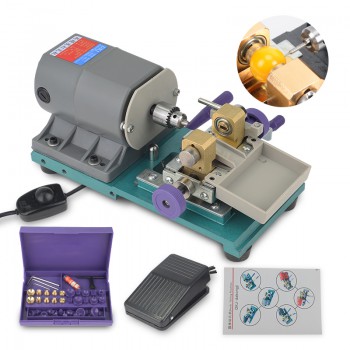
Maintenance costs are generally modest if the machine is operated correctly. Keeping the spindle clean, replacing worn drill bits promptly, and checking alignment at regular intervals can prevent most common problems. Compared with the financial loss caused by broken high-quality pearls, routine maintenance is relatively inexpensive.
The return on investment also depends on production frequency. A business that drills only a handful of pearls each month may struggle to justify purchasing dedicated equipment. On the other hand, workshops producing bridal jewelry, pearl necklaces, or custom commissions throughout the year often recover the investment more quickly through reduced material waste and improved productivity.
Customer perception should not be overlooked either. Well-centered drill holes allow pearls to hang naturally and create a more refined appearance. Better craftsmanship often leads to stronger customer satisfaction, repeat orders, and positive recommendations. Although buyers may never know which machine produced the jewelry, they certainly notice the quality of the finished piece.
Ultimately, a pearl drilling machine is not merely a tool for making holes. It is an investment in precision, efficiency, and product consistency. For small businesses planning to expand their pearl jewelry offerings or improve production standards, the machine can become an asset that supports both craftsmanship and profitability for years to come.
https://www.jewelerstoolsmall.com/goods-1055.html
07-07-2026, 11:23 geschreven door peter25
|