|
In jewelry production, efficiency is often measured not only by how quickly pieces are made but also by how consistently they reach the desired finish. While advanced technologies such as CNC machining, laser engraving, and automated casting have transformed many stages of manufacturing, finishing remains a critical step that directly affects the appearance and perceived value of the final product. Jewelry rotary tumblers have found a renewed place in modern workshops by bridging the gap between production speed and surface quality.
A rotary tumbler works through controlled friction. Jewelry components rotate inside a barrel together with selected media, water, and compounds. As the barrel turns, the media gently interacts with the metal surfaces, removing small imperfections and smoothing edges. Although the principle is simple, its role within a contemporary manufacturing environment is far more sophisticated than many people assume.
Modern jewelry facilities increasingly integrate tumbling operations immediately after casting or machining. Newly produced parts often carry burrs, oxidation marks, or rough surfaces that would otherwise require extensive manual preparation. By introducing a rotary tumbling stage early in the workflow, manufacturers can standardize surface conditions before pieces move to polishing, stone setting, or assembly departments. This creates greater consistency throughout the entire production line.
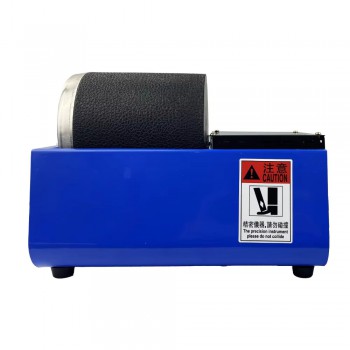
Another advantage lies in batch processing. Instead of assigning workers to finish individual components one by one, dozens or even hundreds of small parts can be processed simultaneously. This approach is particularly valuable for businesses producing chains, findings, charms, and other high-volume items. Labor resources can then be redirected toward tasks that require specialized craftsmanship and human judgment.
Workflow planning also benefits from the predictable nature of rotary tumblers. Production managers can schedule finishing cycles according to daily output targets, creating a smoother transition between departments. Since tumbling times are relatively easy to estimate, bottlenecks become easier to identify and manage. Consistent scheduling contributes to shorter lead times and more reliable delivery commitments.
The selection of tumbling media has become increasingly specialized. Stainless steel shot may be used to achieve work hardening and brightness, while ceramic or plastic media can focus on deburring and surface refinement. By tailoring media combinations to specific alloys and product categories, manufacturers can obtain repeatable results with minimal trial and error. This level of control aligns well with modern quality management systems.
Rotary tumblers also support sustainable manufacturing goals. Efficient deburring and pre-polishing reduce the need for aggressive manual grinding, helping preserve precious metal material that might otherwise be removed unnecessarily. Longer-lasting media and improved compound formulations further contribute to reducing consumable waste.
Digital production environments have encouraged closer monitoring of finishing operations as well. Many manufacturers track tumbling cycles, media performance, and processing times alongside other production metrics. This data-driven approach helps optimize machine utilization and maintain stable product quality over extended production runs.
As jewelry manufacturing continues to evolve, rotary tumblers remain highly relevant despite the rise of newer technologies. Their ability to process large volumes efficiently, improve consistency, and support streamlined workflows makes them an essential component of modern production strategies. When properly integrated into a manufacturing system, a jewelry rotary tumbler becomes far more than a finishing tool—it becomes a key contributor to operational efficiency and product excellence.
https://www.jewelerstoolsmall.com/goods-1918.html
16-06-2026, 11:57 geschreven door peter25
|



