SeniorenNetBlogs
jewelerstoolsmall
Inhoud blog
  • The Role of Ergonomics in Professional Jewelry Micromotor Work
  • Mini Gold Melting Furnace Applications in Jewelry Casting
  • How Jewelry Magnetic Tumblers Help Reduce Manual Polishing Time
  • Jewelry Bench Dust Collector vs Traditional Workshop Ventilation Methods
  • Factors That Affect Welding Quality in Jewelry Spot Welding Machines

    Zoeken in blog


    Beoordeel dit blog
      Zeer goed
      Goed
      Voldoende
      Nog wat bijwerken
      Nog veel werk aan
     

    jewelry making tools
    seniorennet.beseniorennet.be
    07-08-2026
    Klik hier om een link te hebben waarmee u dit artikel later terug kunt lezen.Jewelry Bench Dust Collector vs Traditional Workshop Ventilation Methods
    In a jewelry workshop, dust is not simply a matter of keeping the workspace clean. Fine particles generated during grinding, polishing, filing, engraving, and stone setting can affect equipment performance, product quality, and the long-term safety of the craftsman. For decades, many workshops relied on traditional ventilation methods such as open windows, ceiling fans, and general exhaust systems. While these methods still have value, the rise of jewelry bench dust collectors has changed the way professionals approach airborne particle control.
    Traditional workshop ventilation mainly focuses on replacing indoor air. A fan pushes contaminated air away, while fresh air enters from another area. This approach can improve general air circulation, but it has a major limitation: it does not capture dust at the exact point where it is created. During polishing or grinding, microscopic metal particles can spread through the workspace within seconds. By the time a ventilation system removes them, many particles may already have settled on benches, tools, storage areas, or personal clothing.
    ​​​​​​​
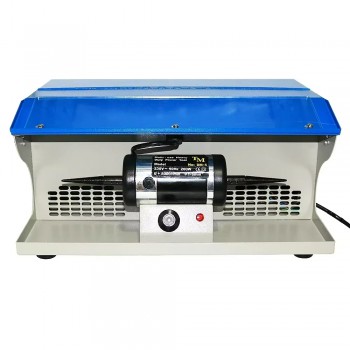
    A jewelry bench dust collector takes a more targeted approach. Positioned directly beside the working area, it captures dust and debris close to the source before particles have a chance to circulate. This localized extraction is particularly important in jewelry making because many materials produce extremely fine dust. Gold, silver, platinum, polishing compounds, abrasive residues, and gemstone particles can all become airborne during routine operations. A high-quality dust collector uses specialized filtration systems to trap these particles efficiently while maintaining a cleaner working environment.
    Another difference lies in precision. Jewelry work requires careful visual inspection, and airborne dust can interfere with accuracy. A layer of fine particles on gemstones or metal surfaces may hide small imperfections during the finishing process. Traditional ventilation can reduce visible dust but often cannot maintain the clean conditions required for precision craftsmanship. Bench dust collectors create a controlled zone around the workpiece, allowing jewelers to focus on details without constant contamination.
    Energy efficiency is another factor worth considering. General ventilation systems often require moving large volumes of air throughout an entire room, which can increase heating and cooling costs. A bench dust collector only removes contaminated air from the immediate working area, making it a more economical solution for individual workstations or small studios. For workshops with several jewelers, combining localized collectors with basic room ventilation can provide better results than relying on a single large exhaust system.
    However, traditional ventilation methods should not be completely dismissed. They remain useful for maintaining overall air quality, controlling humidity, and preventing the buildup of general workshop fumes. In larger production facilities, a well-designed ventilation system may work together with individual dust collectors to create a complete environmental control strategy.
    Maintenance requirements also differ between the two approaches. Traditional ventilation systems usually involve inspecting ducts, fans, and air outlets, while bench dust collectors require regular filter cleaning or replacement. Although this adds a small amount of routine maintenance, the benefit is more direct control over the contaminants produced at each workstation.
    For modern jewelry makers, the choice is not necessarily between bench dust collectors and traditional ventilation. The most effective workshops often combine both systems: general ventilation for overall air management and localized dust collection for precision protection. This balanced approach supports healthier working conditions while preserving the quality standards expected in professional jewelry production.
    As jewelry techniques continue to evolve, dust management has become an essential part of workshop design rather than an afterthought. A jewelry bench dust collector represents more than a cleaning device; it is a practical investment in craftsmanship, efficiency, and the future sustainability of the workshop.

    https://www.jewelerstoolsmall.com/goods-1112.html

    07-08-2026, 11:36 geschreven door peter25

    Reageer (0)
    0 1 2 3 4 5 - Gemiddelde waardering: 0/5 - (0 Stemmen)
    03-08-2026
    Klik hier om een link te hebben waarmee u dit artikel later terug kunt lezen.Factors That Affect Welding Quality in Jewelry Spot Welding Machines

    In jewelry manufacturing, the quality of a weld often determines whether a piece achieves professional durability or requires additional repair work. Jewelry spot welding machines have become valuable tools for joining delicate components, repairing broken settings, and modifying precious metal structures with minimal impact on surrounding areas. However, achieving a clean and reliable weld depends on more than simply operating the machine. Several factors, including material properties, machine settings, electrode condition, and operator technique, directly influence the final welding result.

    The type of metal being welded is one of the most important factors affecting weld quality. Different precious metals and alloys have unique electrical resistance, thermal conductivity, and melting characteristics. Gold, platinum, silver, and their various alloys do not respond to welding energy in the same way. A setting that works well for one material may create overheating, weak joints, or surface damage on another. Understanding the composition of the jewelry piece allows operators to select suitable welding parameters and avoid unnecessary defects.

    Energy control is another critical element in spot welding performance. The welding current, pulse duration, and power level must be adjusted according to the size and thickness of the components. Excessive energy can cause deformation, discoloration, or even metal evaporation, while insufficient energy may produce a shallow and fragile connection. High-quality jewelry spot welding machines provide precise parameter adjustments, allowing craftsmen to create consistent welds even on extremely small parts.


    The condition of the electrodes also has a direct effect on welding accuracy. Electrodes transfer electrical energy to the workpiece, and any contamination, wear, or improper alignment can reduce welding efficiency. Oxidation, metal residue, and uneven electrode tips may create inconsistent contact points, leading to irregular weld penetration. Regular cleaning, shaping, and replacement of worn electrodes help maintain stable performance.

    Surface preparation is often overlooked but plays a major role in achieving strong welds. Dirt, polishing compounds, grease, and oxidation layers can interfere with electrical conductivity between the welding contacts. Before welding, jewelry components should be properly cleaned and positioned to ensure a direct connection. Even small amounts of residue can affect the stability of the welding arc and create weak bonding areas.

    The design and positioning of the jewelry parts also influence the final result. Thin chains, prongs, and decorative elements require careful handling because excessive pressure or incorrect positioning can damage delicate structures. Proper support and accurate alignment allow the welding energy to concentrate exactly where it is needed. Experienced jewelers often use magnification tools to improve visibility and control during the process.

    Operator skill remains an essential factor despite advances in welding technology. A modern spot welding machine can provide accurate power output, but it cannot replace careful judgment. Experienced users understand how different metals react, how much pressure to apply, and when adjustments are necessary. Developing practical experience with various jewelry repairs helps improve consistency and reduces material waste.

    Environmental conditions can also influence welding results. Stable electrical supply, proper ventilation, and a clean working area contribute to reliable operation. Dust, moisture, and unstable power sources may affect machine performance over time. Maintaining a controlled workspace helps protect both the equipment and the quality of finished jewelry.

    Jewelry spot welding is a precise process where small details create significant differences. By selecting the correct settings, maintaining equipment, preparing materials properly, and improving operator skills, jewelers can achieve stronger and cleaner connections. Understanding the factors that affect welding quality allows craftsmen to fully utilize their machines and produce jewelry pieces with greater reliability and craftsmanship.


    https://www.jewelerstoolsmall.com/goods-2007.html

    03-08-2026, 11:38 geschreven door peter25

    Reageer (0)
    0 1 2 3 4 5 - Gemiddelde waardering: 0/5 - (0 Stemmen)
    Archief per week
  • 24/08-30/08 2026
  • 17/08-23/08 2026
  • 10/08-16/08 2026
  • 03/08-09/08 2026
  • 27/07-02/08 2026
  • 20/07-26/07 2026
  • 13/07-19/07 2026
  • 06/07-12/07 2026
  • 29/06-05/07 2026
  • 22/06-28/06 2026
  • 15/06-21/06 2026
  • 08/06-14/06 2026
  • 01/06-07/06 2026
  • 25/05-31/05 2026
  • 18/05-24/05 2026
  • 11/05-17/05 2026
  • 04/05-10/05 2026
  • 27/04-03/05 2026
  • 20/04-26/04 2026
  • 13/04-19/04 2026
  • 06/04-12/04 2026
  • 30/03-05/04 2026
  • 23/03-29/03 2026
  • 16/03-22/03 2026
  • 09/03-15/03 2026
  • 02/03-08/03 2026
  • 23/02-01/03 2026
  • 02/02-08/02 2026
  • 26/01-01/02 2026
  • 19/01-25/01 2026
  • 12/01-18/01 2026
  • 05/01-11/01 2026
  • 22/12-28/12 2025

    E-mail mij

    Druk op onderstaande knop om mij te e-mailen.


    Gastenboek

    Druk op onderstaande knop om een berichtje achter te laten in mijn gastenboek


    Blog als favoriet !


    Blog tegen de regels? Meld het ons!
    Gratis blog op http://blog.seniorennet.nl - SeniorenNet Blogs, eenvoudig, gratis en snel jou eigen blog!