|
Porosity remains one of the most persistent defects in jewelry casting, quietly undermining structural integrity and surface quality even in otherwise well-executed pieces. In traditional casting environments, its causes are often scattered across multiple stages—wax burnout inconsistencies, turbulence during metal injection, or uncontrolled cooling rates. While skilled technicians can mitigate some of these issues manually, automated systems are changing how the industry approaches the problem at its root.
Modern automated casting setups integrate tightly controlled vacuum and pressure cycles, replacing the variability of hand-operated processes. When molten metal is introduced into the mold under a precisely regulated pressure curve, air entrapment is significantly reduced. This alone addresses a major source of gas-related porosity. In addition, vacuum-assisted chambers evacuate trapped air from investment molds before the metal enters, ensuring fewer voids form during solidification.
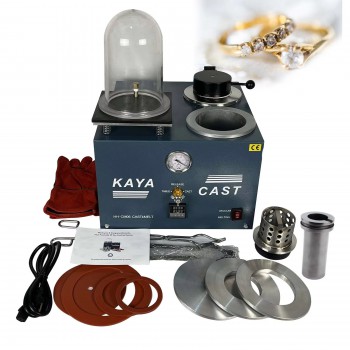
Temperature regulation is another area where automation shows its strength. Inconsistent metal temperature is a frequent contributor to shrinkage porosity. Automated induction melting systems maintain narrow thermal windows, preventing overheating or premature cooling. By keeping the alloy within an optimal casting range, metal flow improves and solidification becomes more uniform, reducing internal gaps that would otherwise weaken the piece.
Cooling control, often overlooked in manual setups, is equally important. Automated systems can manage mold cooling rates through staged environments or controlled quenching protocols. Instead of relying on ambient conditions, which vary from day to day, the system enforces repeatable cooling curves. This reduces internal stress gradients that often lead to micro-void formation.
Another advantage lies in process monitoring. Sensors embedded in modern automatic jewelry casting machines track pressure, temperature, and vacuum levels in real time. If deviations occur, adjustments are made instantly or flagged for correction. This level of feedback is difficult to achieve in manual workflows, where problems are often discovered only after casting defects appear. With automation, the process becomes less reactive and more predictive.
Material preparation also benefits from automation. De-gassing of molten alloys, for example, can be standardized through timed agitation or inert gas exposure. These steps reduce dissolved gases before casting begins, further lowering the risk of porosity.
While automation does not eliminate porosity entirely, it significantly shifts the balance. Instead of relying on post-casting inspection and correction, manufacturers can focus on prevention with far greater consistency. The result is not only higher yield rates but also improved reliability in fine detail work, where even microscopic defects can compromise value.
As jewelry designs become more intricate and customer expectations rise, reducing casting defects is no longer just a technical concern—it is a competitive necessity. Automated systems, with their ability to stabilize and refine every stage of the process, are becoming central to achieving that standard.
Related articles: https://carl259.pixnet.net/blog/posts/885101211070711765
|



